
Dreaming of the blue flower and the decay of the aura
Aura refers to the unique quality inherent in an artwork that cannot be con-veyed through mechanical reproduction techniques such as photography.
This concept was articulated by Walter Benjamin in his seminal essay, The Work of Art in the Age of Mechanical Reproduction. Benjamin posited that 'even the most perfect reproduction of a work of art is missing one element: its presence in time and space, its unique existence at the place where it happens to be.'
He termed this unique cultural context—its presence in time and space—as its 'aura.' The blue flower (Blaue Blume) was a central symbol of inspiration for the Romanticism movement, and remains an enduring motif in Western art to-day. It stands for desire, love, and the metaphysical striving for the infinite, and unreachable. It symbolizes hope and the beauty of things.
In contemporary times, dreaming of the Blue Flower seems impossible.
If anyone were to awaken as Heinrich von Ofterdingen today, they must have overslept saiys W.Benjamin. This blue flower the sacred symbol of the Romantic school, it is meant to symbolize the deep and sacred longings of a poet's soul. Romantic poetry in-variably deals with longing; not a definite, formulated desire for some obtainable object, but a dim, mysterious aspiration, a trembling unrest, a vague sense of kinship with the infinite, and a consequent dissatisfaction with every form of happiness which the world has to offer. So, if anyone today dreams of a blue flower must be overslept! And the...
"...history of this dream remains unwritten. Understanding the history of dreams would entail using historical analysis to dispel the superstition that dreams originate solely in nature. Dreaming is part of history"*.
A statistical analysis of dreams would transcend the boundaries of charming anecdotes and venture into the stark reality of battlefields. Dreams have instigated wars, and wars have shaped the rights and boundaries of dreams.
Dreams no longer open onto blue horizons; they have turned grey. A grey layer of dust on objects is now the highest faculty of dreams. Today, dreams lead directly into banality. Technology is erasing the exterior appearance of things, much like how banknotes, once invalidated, are cancelled. In a final farewell, our hand grasps the exterior appearance of things in dreams, feeling their familiar shapes.
This is not always the best way to touch things: children do not clasp a glass; they grasp it by putting their fingers inside. Which side do things present to dreams? What is this most worn place? It is the side worn thin by habit and adorned with cheap maxims. The side that things present to dreams is 'kitsch.' Falling to the ground, the fantasy images of things land like pages from an accordion-fold picture book titled "The Dream."
Where each page contains a maxim, such as: "Ma plus belle maîtresse c’est la paresse" (My most beautiful mistress is laziness), or "Une médaille vernie pour le plus grand ennui" (A gold medal for the greatest boredom], or "Dans le corridor il y a quelqu’un qui me veut à la mort" (In the hall, there is someone who has it in for me).
The Surrealists composed such lines, and their friends reproduced them in picture books. Paul Eluard titled one such effort "Répétitions."
Max Ernst drew four small boys for its frontispiece. They have their backs turned to the reader, their teacher, and the teacher’s desk, looking out over a balustrade where a balloon hovers. A huge pencil balances on the balustrade, standing on its point.
The repetition of childhood experiences gives us pause: as children, the protest against the world of our parents did not yet exist. In the midst of our parents’ world, we proved to be superior. Embracing the banal also means embracing the good that lies so near.
The sentimentality of our parents, repeatedly distilled, provides the most objective image of our feelings. Their long-windedness contracts into a muddled picture puzzle in our minds; their conversation’s ornament becomes full of i-nermost entanglements. Therein lies deep affection and love—kitsch. Surreal-ism aims to re-establish dialogue in its essential truth by freeing both partners from the compulsion to be polite. The speaker will not develop a thesis, and the reply will be indifferent to the personal pride of the previous speaker.
Words and images become springboards for the listener's mind. These insights from Breton’s Surrealist manifesto form the formula for dialogic misunderstanding, or what is truly alive in dialogue. Misunderstanding is the rhythm with which reality forces its way into conversation. The more a person speaks within this reality, the more they are misunderstood. A critical aspect of Benjamin’s notion of aura is its complex temporality, which incorporates memory and history. Benjamin asserts that the experience of the aura is in decline due to industrial production, information, transportation, and urbanisation—factors that alienate and proliferate shock sensations. Yet, only through disintegration can the aura be recognised as a component of past experience. This decline marks a specific historical experience, which Benjamin reads as a hidden figure in Baudelaire’s work.
The reorganization of perception in modernity uproots the subject from a hu-man range of perception, described by Mary Ann Doane as a "despatialization of subjectivity."
Time has conceptual priority over space, making this shift a matter of detemporalization. The images of loss, reflect the erosion of spatial and temporal conditions of experience. The reification of time has eroded the capability and communicability of experience and the possibility of imagining a different world. The decay of the aura and the atrophy of the vision of a better nature are one and the same. ‘ The notion of the "blue distance”, as Jack Catling men-tion explaining his works, ‘’that never gives way to foreground or dissolves at our approach, presenting these moments, the awkward moments of play where the elements fray and what is produced from these collisions, as a lens for bringing into question our acceptance of the world around us; an interroga-tion that necessitates a gradual reveal of the magical backstage layers of the world around us.’’
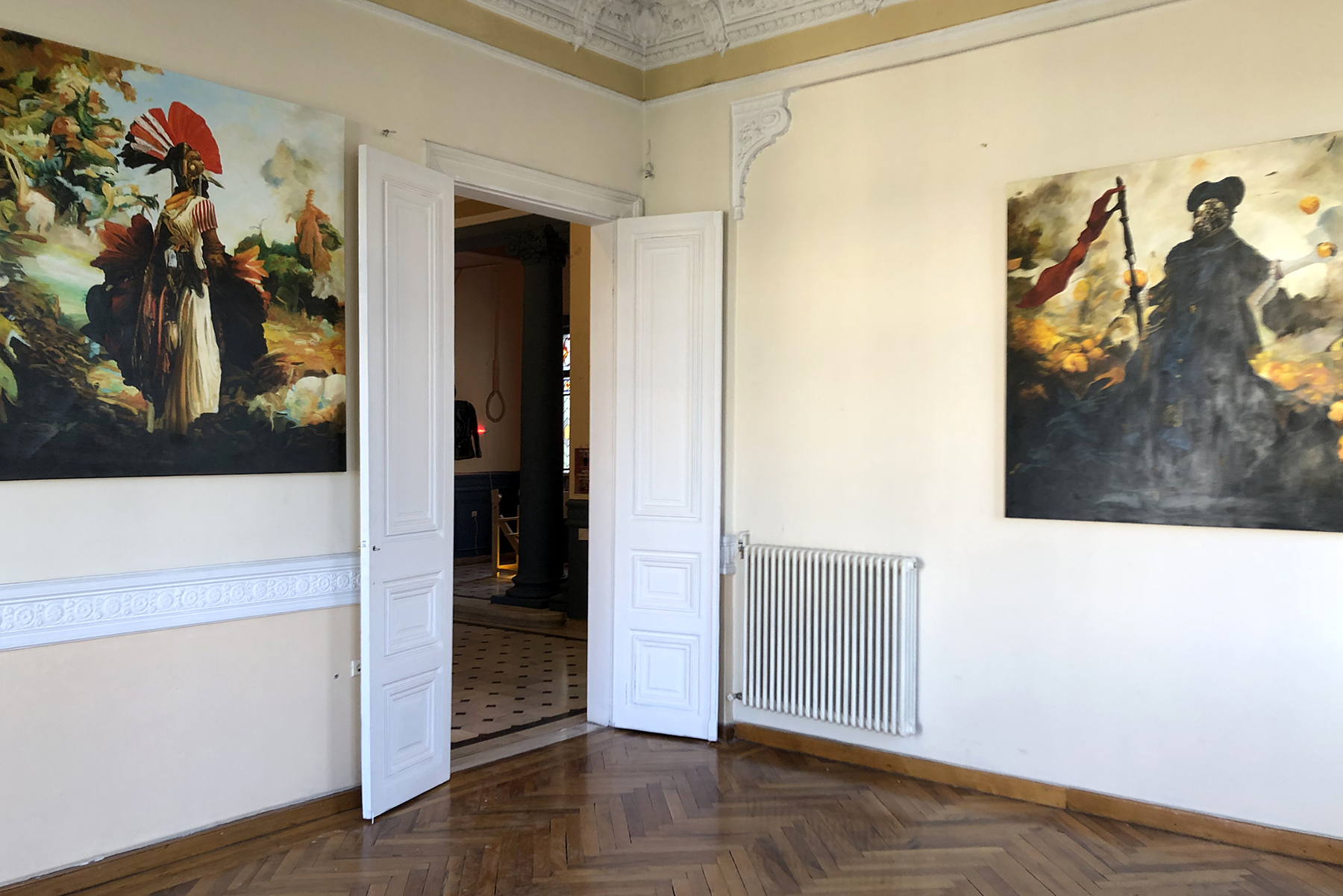
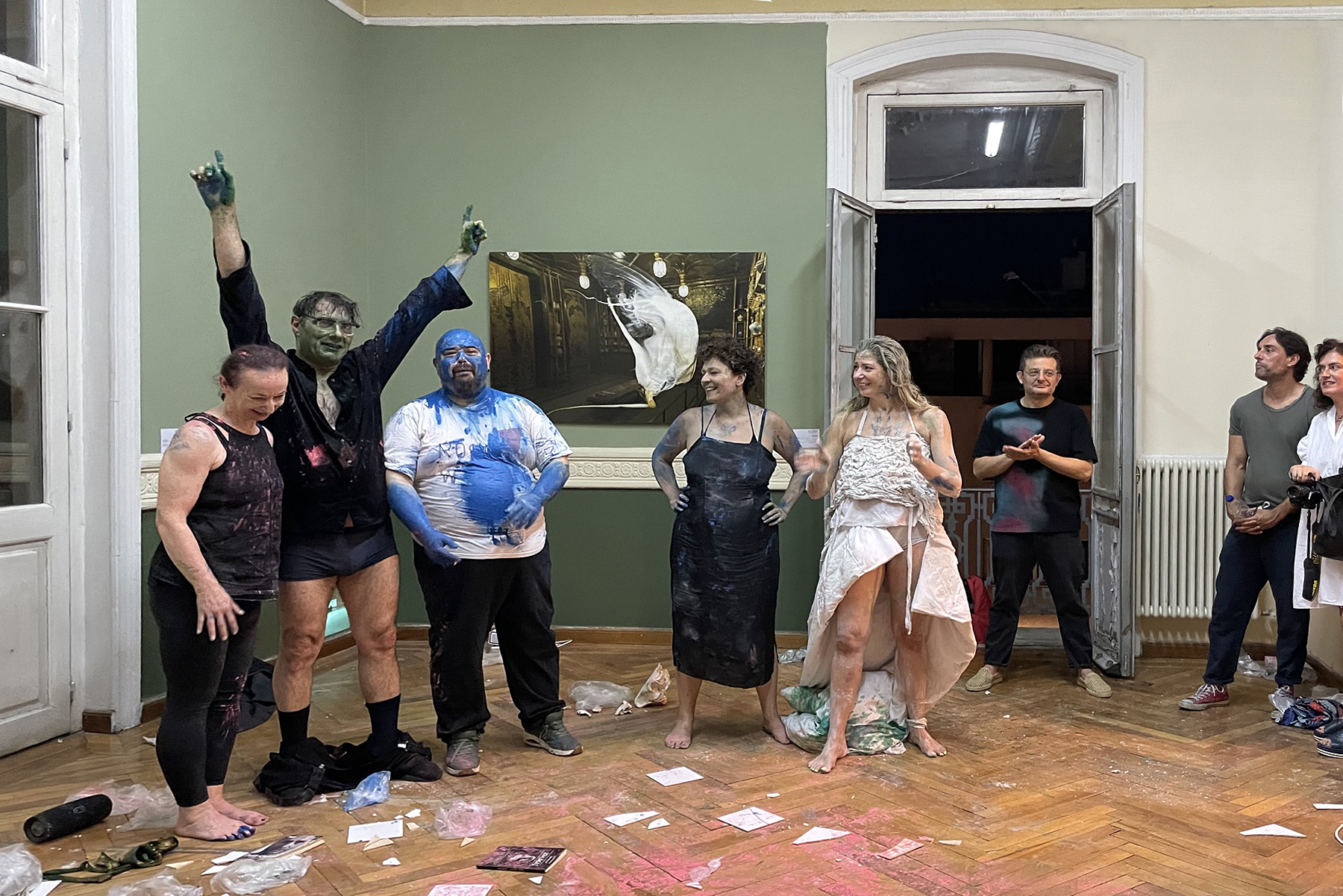
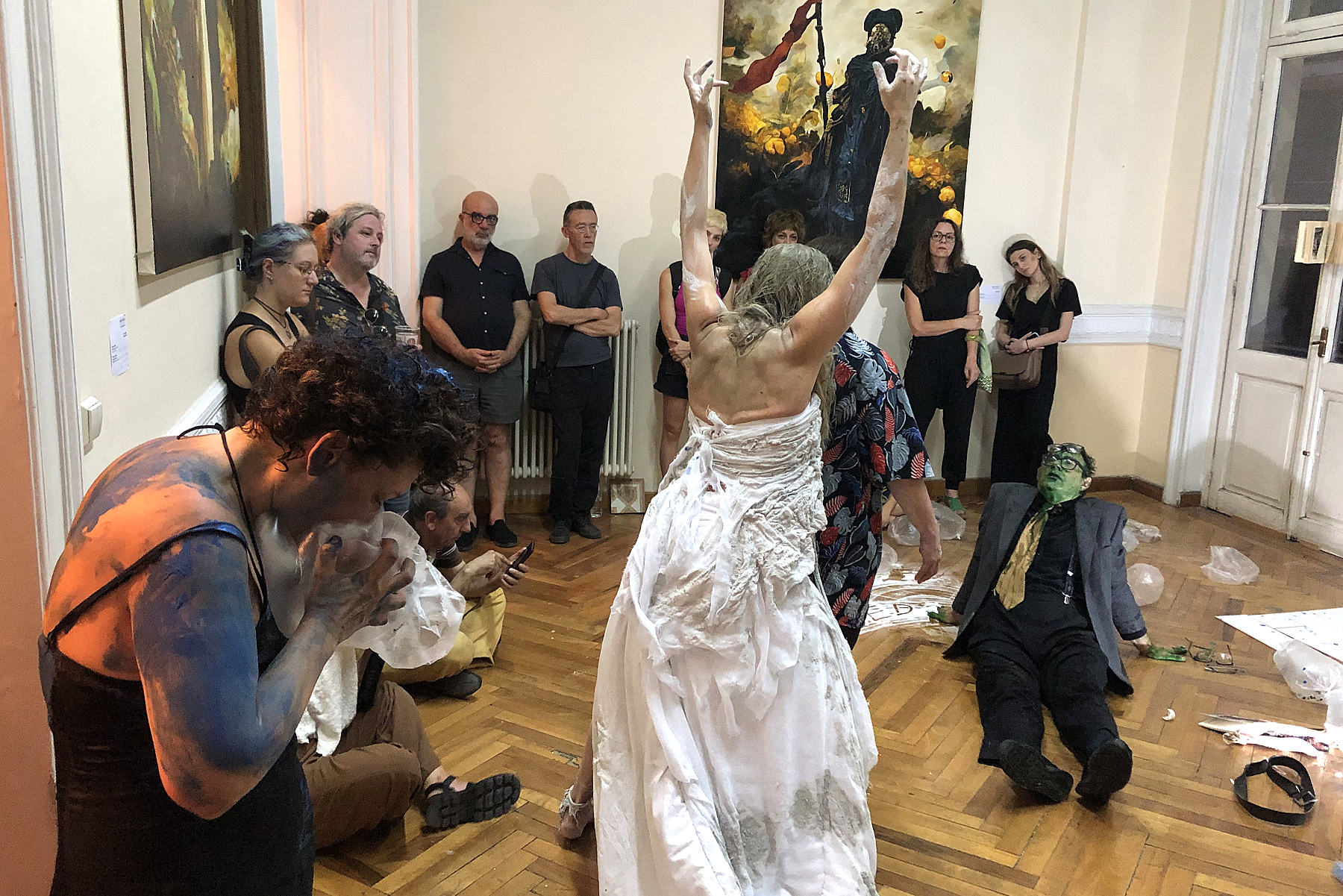
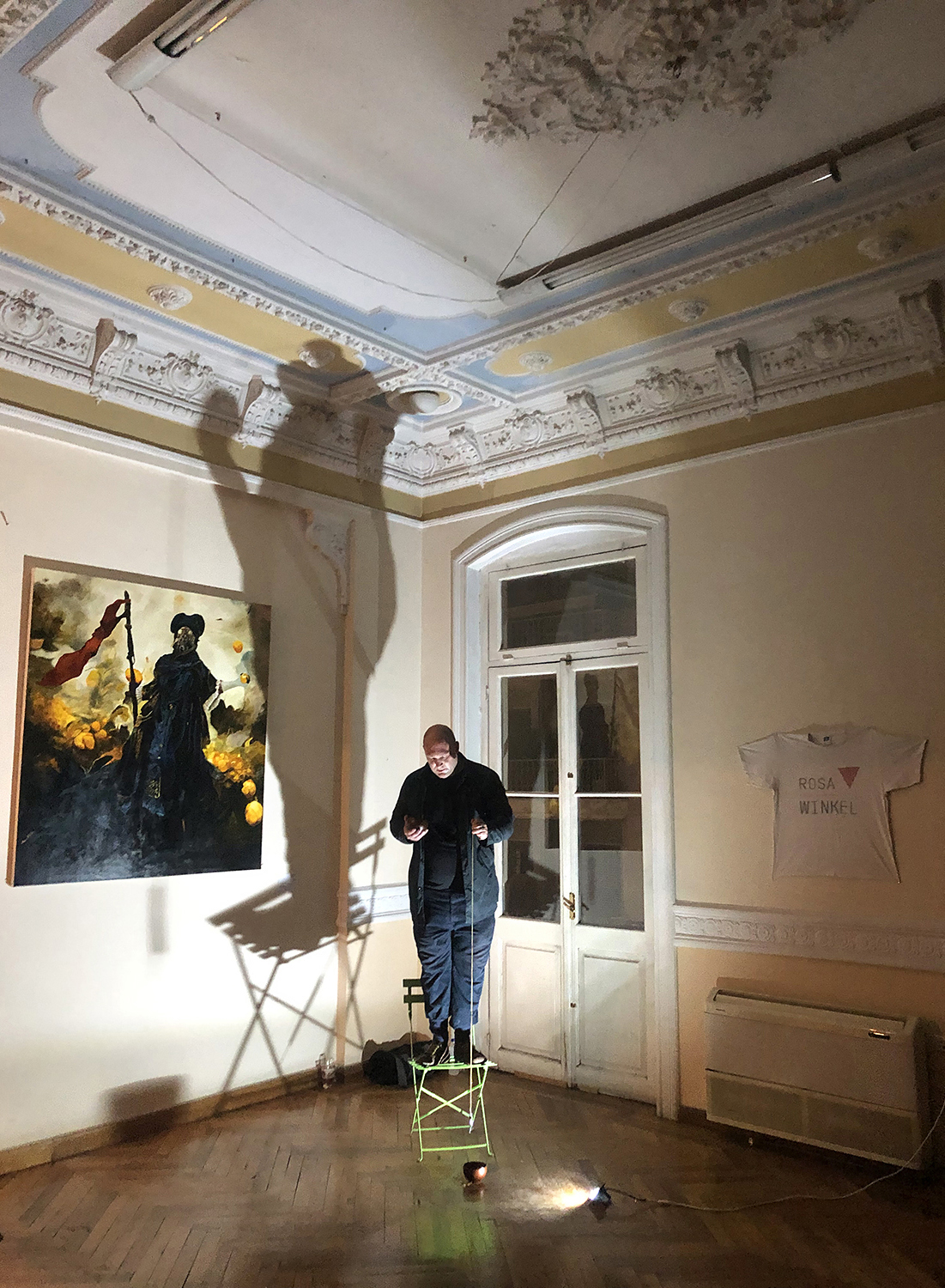
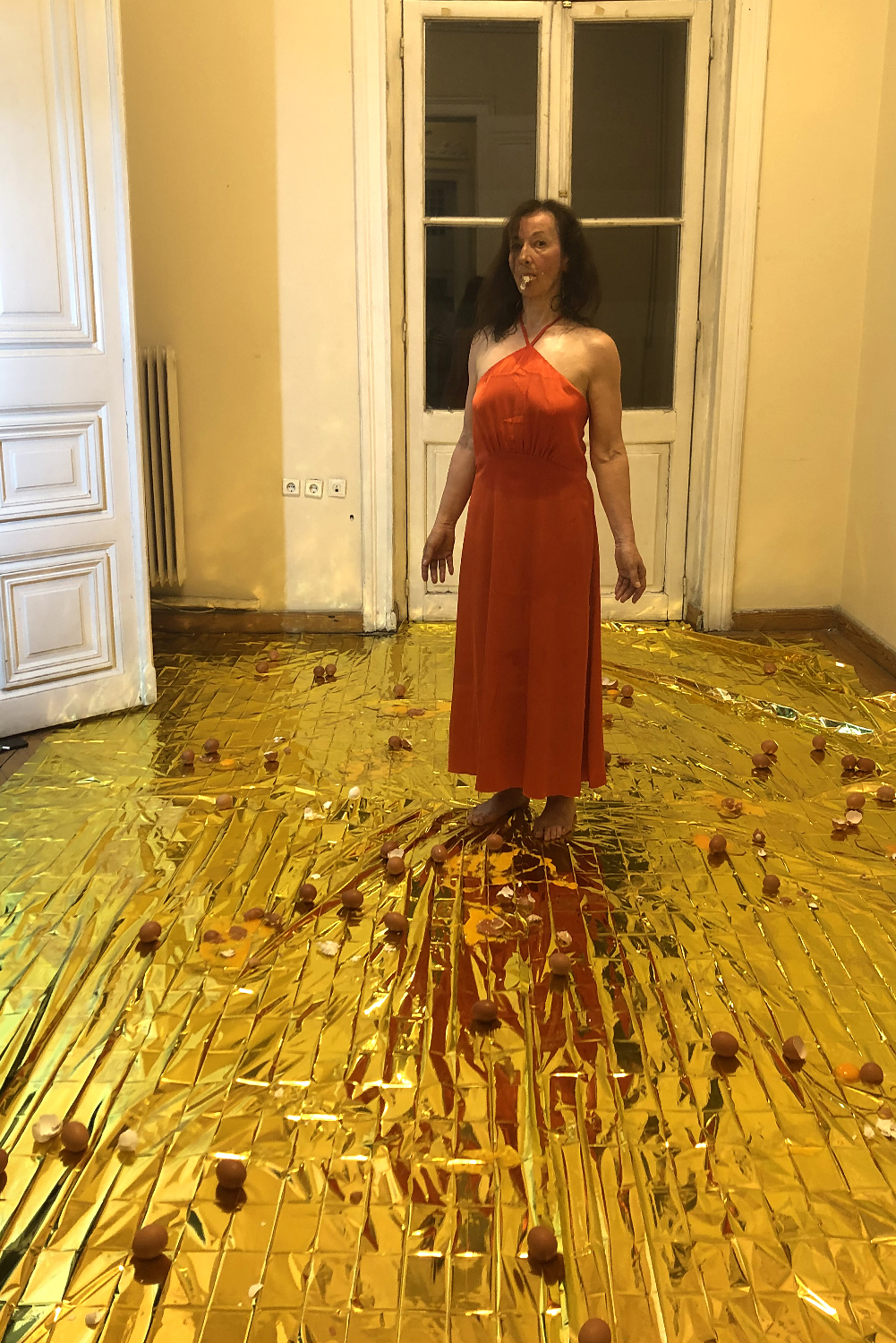
Artists: Bryan Catling, Gillian Dyson (performance), Chris Hawtin, Jack Catling (performance and video), Yiannis Mitrou (performance), Filippos Tsitsopoulos (performance), Maro Theodosiou (performance), Maria Charela (performance), Ioanna Skantzeli (performance), Alma Kalma (Lab performance).
Curated by: Filippos Tsitsopoulos
Brian Catling https://en.wikipedia.org/wiki/Brian_Catling
Jack Catling https://jackcatling.co.uk
Gillian Dyson https://www.gilliandyson.co.uk
Chris Hawtin https://www.chrishawtin.com
Filippos Tsitsopoulos https://filippostsitsopoulos.com
The exhibition is presented as part of Back to Athens 11 International Art Meeting | 2024: Crossroads - knowledge and worldly pleasures – a review
Back to Athens 11 International Art Meeting | 2024
Curated by: Georg Georgakopoulos, Fotini Kapiris, Christian Rupp.
Organised by: APART Art Research and Applications. Under the Auspices of the City of Athens. With the financial support and under the auspices of the Ministry of Culture [Silence of the Sirenes], Bundesministerium für Kunst, Kultur, öffentlichen Dienst und Sport, Austrian Embassy Athens, Academy of Fine Arts Vienna akbild, ZOIA, Czech Centre Athens in the frame of “Franz Kafka's memorial year 2024”. Participation, athensintersection, ARTmART. Coordinated by CHEAPART.
Back to Athens 11 International Art Meeting | 2024: Crossroads - knowledge and worldly pleasures
Isaiah Megaron
65 Patision, Athens
Opening date: Wednesday, June 26
Duration: 26 - 30.06.2024
Hours: Wed. – Fri. 16:00 - 22:00, Sat. – Sun. 12:00 – 22:00
